

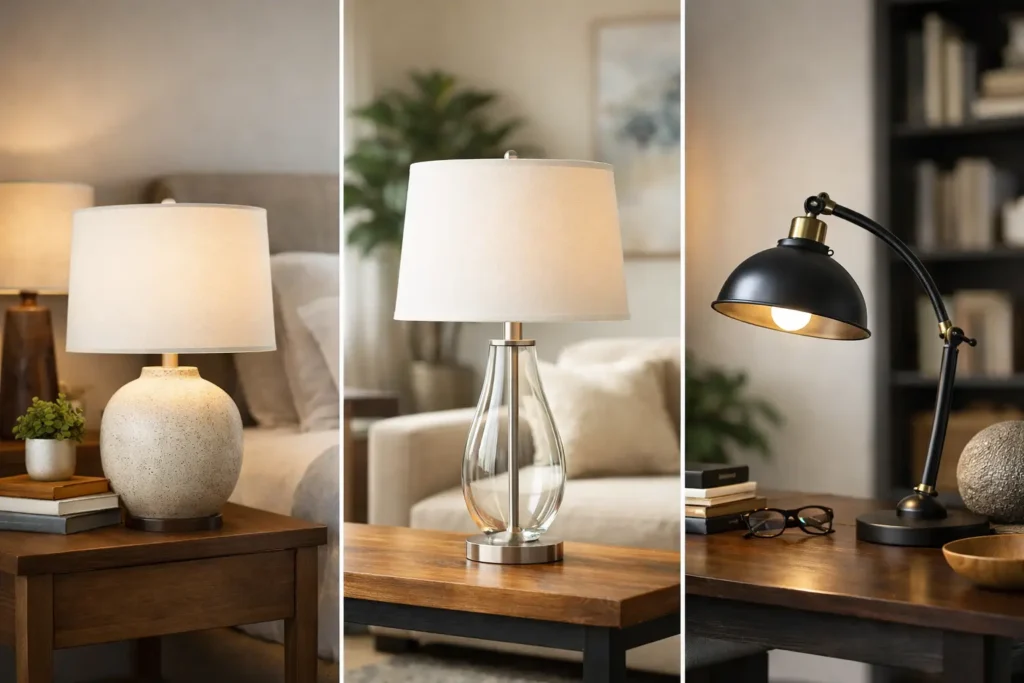
A table lamp can make a room feel finished in a way few pieces can. Set the wrong one beside a sofa or bed, and the whole space feels slightly off – too small, too harsh, too ordinary. If you are wondering how to choose table lamps that feel beautiful, useful, and intentional, the answer starts with proportion, then moves into mood, materials, and the kind of statement you want the room to make.
The best table lamps do more than fill an empty surface. They soften corners, add glow at eye level, and introduce personality even when the rest of the room is quiet. In a home that leans expressive and collected, a lamp can be functional lighting by day and a piece of art by night.
How to Choose Table Lamps by Function First
Before you fall for color, glasswork, or an intricate base, ask what the lamp needs to do. A reading lamp for a living room chair has a different job than a bedside lamp or an accent lamp on a console. The right choice depends on how the light will be used, not just how the lamp looks when switched off.
If the lamp is for reading, focused light matters. You want enough brightness to support the task without glare. For bedside use, gentler light often feels better, especially if one person is reading while another is winding down. On an entry table or buffet, the lamp may be mostly atmospheric, there to create warmth and a welcoming glow rather than bright illumination.
This is where many people go wrong. They shop only by style and end up with something lovely but impractical. A lamp can be stunning and still fail the room if it is too dim for reading or too bright for relaxation.
Get the Scale Right
Size is usually the first thing the eye notices, even if you do not realize it. A tiny lamp on a substantial console disappears. An oversized lamp on a petite nightstand feels crowded and top-heavy. Good scale creates visual ease.
Start with the table itself. A larger side table or credenza can support a lamp with more presence, especially if the base has artisanal detail or rich mosaic pattern. Smaller tables need breathing room, so the lamp should complement the surface rather than consume it.
The room also matters. In a lofty living room with high ceilings, a lamp with a taller profile can hold its own against larger furniture and architectural volume. In a compact condo or guest room, a slimmer silhouette may feel more refined.
Height Matters More Than Most People Expect
The bottom of the lampshade should usually sit around eye level when you are seated nearby. That helps prevent the bulb from shining directly into your eyes. For bedside tables, that means thinking about the height of your mattress and headboard, not just the table. For living rooms, consider the seat height of the sofa or chair beside it.
If you are pairing lamps, symmetry helps, but exact matching is not always necessary. In more collected interiors, similar height with different detailing can feel more layered and personal than a strict matched set.
Match the Shade to the Light You Want
A lamp shade shapes the mood as much as the base does. Lighter shades tend to diffuse more light and keep the effect airy. Darker or richly colored shades create a more intimate glow, though they may reduce brightness.
If you want broad ambient light, choose a shade that allows light to spread generously. If you are after a dramatic accent, a more directional glow can be beautiful. That trade-off matters. The most atmospheric lamp is not always the most practical, and the brightest lamp is not always the most flattering.
With decorative glass and mosaic lamps, color becomes part of the lighting experience. Jewel tones can cast a warm, romantic ambiance that plain white shades simply cannot. That is part of their appeal. They do not just light a room – they tint it with character.
Consider the Room’s Style, But Do Not Play It Too Safe
A lamp should belong in the room, but it does not need to disappear into it. In fact, the most memorable interiors usually include at least one piece that interrupts predictability. If your furniture is neutral and tailored, a richly patterned table lamp can bring movement and soul. If the room already carries bold color, a lamp with a complementary palette can tie everything together.
This is especially true in spaces that need a focal point. A handcrafted lamp with mosaic glass, aged metal, or artisan detailing can become the moment that shifts a room from pleasant to unforgettable. That does not mean every room needs maximum ornament. It means the lamp should either harmonize beautifully or stand out with purpose.
Color Choice Changes Everything
Color influences not only appearance but mood. Blue and green tones often feel serene and layered. Amber, red, and gold bring warmth and drama. Multicolor mosaic patterns can energize a room and echo other decorative accents without feeling flat.
If you are cautious with color, start by repeating one or two shades already present in the room – in pillows, artwork, a rug, or ceramics. If the space needs life, a lamp is one of the easiest places to introduce bolder color without committing to a large furniture piece.
Customization can be especially helpful here. Choosing globe colors or pattern combinations allows you to coordinate with your room while still bringing home something distinctive. That balance between personal taste and artisanal beauty is often what makes a lighting piece feel truly special.
Think About Material and Craftsmanship
When people ask how to choose table lamps, they often focus on dimensions and style categories. Those matter, but materials are what give a lamp presence. Glass reflects light differently than ceramic. Metal can feel sleek, sculptural, or old-world depending on the finish. Handcrafted mosaic work introduces texture, depth, and small variations that mass-market pieces simply do not offer.
This is one of the clearest dividing lines between a lamp that looks decorative in a catalog and one that feels captivating in a real room. Handmade pieces have visual movement. They catch the eye from different angles. They reward a closer look.
For gift buyers and design lovers alike, craftsmanship also adds meaning. A table lamp can be practical, yes, but it can also feel collectible. That is a different kind of value, and for many homes, it is the difference between furnishing and decorating.
Placement Shapes the Effect
The same lamp can feel elegant in one spot and awkward in another. Placement changes everything. On a bedside table, the lamp should leave enough room for essentials. On a console, it can be taller and more dramatic, especially when balanced with artwork, mirrors, or decorative objects. In a living room, a table lamp beside upholstery should help create a layered lighting plan rather than work as the only source of illumination.
Try to think in pairs and groupings, even if you are buying one lamp. What is around it? Does it need to share visual space with a vase, framed art, or a stack of books? Is it meant to anchor one end of a sideboard or act as a solo statement on a pedestal table?
There is also a practical side. Make sure the lamp’s footprint fits comfortably on the surface, with enough clearance that it does not feel precarious or cramped.
How to Choose Table Lamps for Different Rooms
In bedrooms, comfort comes first. The lamp should be easy on the eyes, scaled to the nightstand, and tall enough to be useful while seated in bed. In living rooms, flexibility matters more. These lamps often need to support conversation, reading, and atmosphere all at once.
In entryways, table lamps are pure magic. They create an instant sense of welcome and make the home feel thoughtfully lit rather than overhead-lit. Dining rooms and buffets benefit from lamps too, especially when you want a softer evening mood. Home offices need a little more caution. A highly decorative lamp can be stunning there, but it still needs to provide workable light if the desk is used regularly.
For boutique spaces, hospitality interiors, or gift-forward decorating, a more expressive lamp often makes the strongest impression. This is where handcrafted Turkish lighting can feel especially spellbinding – part illumination, part conversation piece, and entirely memorable.
The Final Test Before You Buy
Once you find a lamp you love, pause for one more check. Ask whether it suits the room at three levels: function, proportion, and emotion. Does it give the kind of light you need? Does it fit the table and the room? And perhaps most importantly, does it create the feeling you want when you walk in?
The right lamp should feel like more than a practical purchase. It should add depth, warmth, and a little wonder. At Whispers of Istanbul, that is the beauty of statement lighting rooted in craftsmanship – it does its job, but it also leaves the room transformed.
Choose the lamp that makes your space feel more like you, and the rest of the room will often follow.