

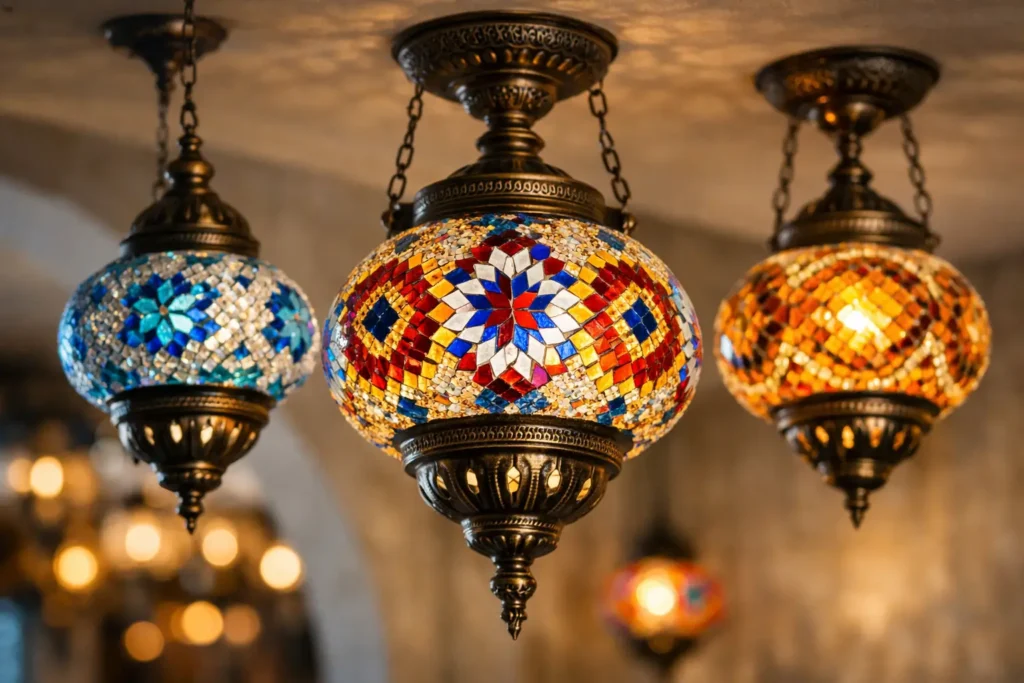
The right ceiling light does more than brighten a room. It sets the mood the moment you walk in, frames your furniture, and turns an ordinary ceiling into part of the design story. This guide to Turkish ceiling lights is for anyone who wants lighting that feels collected, expressive, and unmistakably special – not pulled from a shelf of lookalike fixtures.
Turkish ceiling lights have a presence that mass-market lighting rarely matches. Handcrafted mosaic glass, rich metalwork, and jewel-like color create an atmosphere that feels warm, layered, and alive. Whether you are styling a dining room, adding character to a condo, or designing a boutique hospitality space, these fixtures offer both function and a genuine sense of artistry.
What makes Turkish ceiling lights stand out
Turkish ceiling lights are rooted in decorative traditions that celebrate detail. Instead of flat, purely utilitarian fixtures, you get pieces built around pattern, texture, and glow. Mosaic globes scatter light in a softer, more romantic way than stark exposed bulbs or ultra-minimal flush mounts. That matters if you want a room to feel welcoming rather than clinical.
The craftsmanship is part of the appeal. Many styles feature hand-placed glass pieces, shaped metal frames, and silhouettes that feel timeless rather than trendy. A well-chosen Turkish ceiling light can work as a focal point in a classic interior, but it can also add tension and beauty to a more modern room. That contrast is often what makes the piece sing.
There is also the matter of personality. One customer may love deep sapphire and amber tones for a dramatic dining room. Another may prefer softer whites, golds, and clear glass for a brighter, more understated look. The beauty of this category is that it does not force you into a single design lane.
A guide to Turkish ceiling lights by room
The smartest way to shop is to start with the room, not just the fixture. Ceiling lights need to fit the scale of the space, the ceiling height, and the mood you want to create.
Living rooms
In living rooms, Turkish ceiling lights often work best as a statement piece that anchors the seating area. If your room has standard ceiling height, a semi-flush or close-to-ceiling design can deliver impact without hanging too low. In a room with taller ceilings, a chandelier-style ceiling fixture with multiple mosaic globes adds depth and drama.
Think about what else is already happening in the room. If your sofa and rug are neutral, this is your chance to introduce color overhead. If the room is already rich with pattern, a fixture with a more limited palette may feel more refined.
Dining rooms
Dining rooms are ideal for ceiling lights with strong visual presence. This is one of the few spaces where decorative lighting can be a little theatrical and still feel perfectly at home. A multi-globe Turkish ceiling light above the table can create an intimate glow that makes dinner feel more special, even on a weeknight.
Size matters here. Too small and the fixture disappears. Too large and it can overwhelm the table. As a general rule, the light should feel connected to the table below it rather than floating as an unrelated accent.
Bedrooms
Bedrooms benefit from a softer hand. Turkish ceiling lights with warmer tones, gentler mosaic patterns, or fewer globes can bring in romance without becoming visually busy. If your bedroom is meant to feel restful, lean toward balanced color combinations instead of highly contrasting mosaic designs.
This is also a room where layered lighting helps. Ceiling lighting creates the ambient glow, but bedside lamps or sconces usually complete the picture. The ceiling fixture should set the tone, not do every job on its own.
Hallways and entryways
A hallway or entryway is where Turkish lighting can make an immediate impression. These areas are often overlooked, yet they shape the first experience of the home. A compact ceiling light with handcrafted detail can transform a pass-through zone into a moment.
For narrow spaces, choose fixtures that stay close to the ceiling but still offer visual texture. In entryways with more breathing room, a slightly larger piece creates a memorable welcome.
Choosing the right size and drop
Many people fall in love with the colors first, then realize they have not checked scale. It happens all the time. A gorgeous fixture still needs to fit the room properly.
Start with ceiling height. In rooms with lower ceilings, flush mount and semi-flush styles are usually the safest choice. They preserve headroom while still delivering decorative interest. In taller spaces, you have more freedom to choose fixtures with more depth or multiple hanging elements.
Then consider room width. A ceiling light should feel substantial enough to hold its own but not so large that it visually presses down on the room. If you are furnishing a compact condo or apartment, one beautifully made fixture in the right proportion will always look more luxurious than something oversized and crowded.
The number of globes matters too. A single-globe design can feel elegant and restrained. A clustered or multi-globe piece creates more drama and spreads light more broadly. Neither is better in every case – it depends on whether you want a quiet accent or a true centerpiece.
How to choose colors that work beautifully
Color is where Turkish mosaic lighting becomes unforgettable. It is also where shoppers sometimes hesitate. The good news is that you do not need to match every color in the room. You need harmony, not exact repetition.
Warm palettes with amber, red, and gold create a cozy, intimate effect. These tones are especially beautiful in dining rooms, reading corners, and traditional interiors. Cooler palettes with blue, white, and silver feel calmer and can work beautifully in bedrooms, bathrooms, or coastal-inspired homes.
Multicolor mosaic designs bring energy and artistry. They are ideal when you want the fixture to be a conversation piece. More restrained palettes, such as white and gold or clear glass with subtle pattern, give you the handcrafted look with a quieter finish.
If you are choosing a customizable fixture, think about the room in daylight and at night. A color combination that looks vibrant in the afternoon may feel much richer once illuminated. That shift is part of the magic.
Matching Turkish ceiling lights to your design style
One of the biggest misconceptions is that Turkish ceiling lights only suit traditionally decorated homes. In reality, they are remarkably flexible when styled with intention.
In modern interiors, a mosaic ceiling light adds warmth to clean lines and simple furniture. The room feels less sterile and more personal. In bohemian spaces, these fixtures feel naturally at home among layered textiles, vintage accents, and collected décor. In classic interiors, ornate metalwork and rich color can enhance the room’s sense of depth and elegance.
Even in transitional homes, where traditional and contemporary elements meet, Turkish ceiling lights can bridge the gap beautifully. The key is balance. If the fixture is richly detailed, let it have room to breathe. Not every surface in the room needs to compete.
Craftsmanship, customization, and value
A true guide to Turkish ceiling lights should talk about more than appearance. The reason these fixtures continue to captivate discerning shoppers is that they offer artistry you can actually live with every day.
Handcrafted lighting brings subtle variation. No two pieces feel machine-flat or soulless. That slight individuality is not a flaw – it is part of the charm. For buyers who are tired of generic décor, this matters.
Customization is another major advantage. The ability to choose globe colors or fixture configurations means your lighting can reflect your taste instead of forcing you into a preset look. That is especially valuable when you are designing around an existing rug, tile, paint color, or furniture collection.
Value deserves a clear-eyed view. Handmade ceiling lights are not the cheapest option, nor should they be. But when you buy direct-import, artisan-made pieces from a family-run source like Whispers of Istanbul, you are often getting a far more distinctive result than similarly priced designer lighting from mainstream retail. The difference is visible the moment the light turns on.
Before you buy, think about installation and light quality
A beautiful fixture still needs practical consideration. Check the dimensions carefully, confirm your ceiling type, and think about how much ambient light the room needs. Some ceiling lights are meant to create atmosphere first and broad illumination second.
That is not a drawback unless you expect one fixture to do everything. In a large room, you may want recessed lights, lamps, or sconces to support the ceiling light. In a smaller room, a well-placed Turkish ceiling fixture may provide plenty of glow on its own.
Also pay attention to bulb warmth. The right bulb can make mosaic glass look radiant and inviting, while the wrong one can flatten the color. Warm light usually brings out the richness and depth these fixtures are known for.
Turkish ceiling lights are not just overhead fixtures. They are pieces of décor with soul, crafted to cast light and leave an impression. Choose one that suits your space, trust your eye, and let your ceiling become part of the room’s beauty.
