

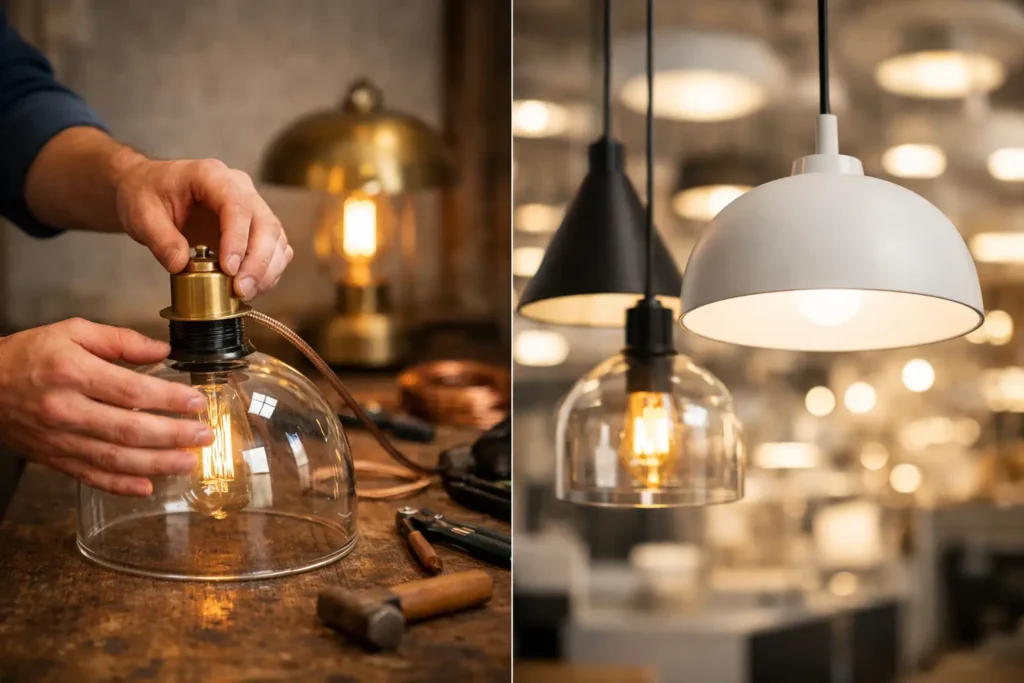
A lighting fixture can change the entire mood of a room before anyone notices the sofa, the rug, or the art on the wall. That is why the choice between handmade lighting vs mass produced lighting matters more than many shoppers expect. It is not simply about price or trend. It is about character, craftsmanship, atmosphere, and whether your home feels styled with intention or filled for convenience.
For design lovers who want a space that feels memorable, lighting is rarely just functional. A hand-finished mosaic pendant, a richly patterned table lamp, or a chandelier assembled by skilled artisans brings presence into a room. Mass-produced lighting can absolutely serve a purpose, especially in practical spaces or large-scale projects, but it often delivers sameness where many homeowners are hoping for distinction.
Handmade lighting vs mass produced lighting: what really sets them apart?
The clearest difference is in how the piece comes to life. Handmade lighting is shaped, assembled, and finished by artisans who work with materials directly. In Turkish mosaic lighting, for example, glass pieces are arranged by hand into intricate patterns that create depth, texture, and a captivating glow. No machine can fully replicate the subtle variations that make each fixture feel alive.
Mass-produced lighting is designed for speed, consistency, and scale. It is manufactured in high volumes, often using standardized molds, finishes, and assembly methods. That efficiency can lower costs and shorten production times, which is why it appeals to many mainstream retailers and budget-conscious buyers.
The trade-off is emotional as much as practical. Handmade pieces tend to carry a sense of story and artistry. Mass-produced pieces tend to prioritize uniformity. If your goal is to create a room that feels layered, personal, and visually rich, that distinction matters.
The difference you can see and feel
When shoppers compare fixtures online, photos do not always tell the whole story. In person, handmade lighting often reveals a level of dimensional beauty that factory-made pieces struggle to match. You may notice the individual placement of glass, the warmth of hand-worked metal, or the nuanced way color shifts when the light is turned on.
This is especially true with statement lighting. A handcrafted chandelier or pendant is not trying to disappear into the background. It is meant to leave an impression. The artisan’s hand is part of the beauty. Tiny variations are not defects. They are proof that the piece was made, not merely processed.
Mass-produced lighting can still look polished, but it often leans on repetition. The finish may be flatter. The detailing may be simplified. The effect may be clean and serviceable, yet less expressive. For some interiors, especially minimalist or temporary spaces, that may be enough. For homes that are meant to feel collected and unforgettable, handmade usually has the stronger presence.
Why uniqueness matters in home décor
Most people do not want their favorite room to look like a showroom copied from a catalog. They want a space that reflects taste, travel, memory, and personality. Handmade lighting supports that goal because it brings natural variation and artistic individuality into the home.
That uniqueness becomes even more meaningful when customization is available. Being able to choose globe colors, fixture size, or chandelier configuration turns lighting into a design decision rather than a compromise. It gives homeowners and decorators more control over how a room feels, whether they want jewel-toned drama, warm ambient glow, or a softer, more neutral palette.
Quality, materials, and longevity
Not every handmade fixture is automatically better than every factory-made one. Quality depends on the maker, the materials, and the construction standards. Still, well-made handcrafted lighting often stands out because the process allows for closer attention to detail.
Artisans are not simply feeding raw materials through an automated line. They are handling metal, glass, ceramic, and other components with care at each stage. That often results in better visual detail and a more substantial feel. In decorative categories such as mosaic lamps and chandeliers, the craftsmanship is the product. Without it, the entire piece loses its magic.
Mass-produced lighting varies widely. Some is perfectly decent and built for everyday use. Some is made with lighter materials and shortcuts that become obvious over time, especially in painted finishes, hardware, or wiring components. If you are furnishing a guest room, a rental unit, or a space where the light is mostly functional, that may be an acceptable compromise. If you are investing in a dining room centerpiece or an entryway showstopper, durability and artistry deserve more weight.
Cost versus value
This is where many shoppers pause. Handmade lighting usually costs more upfront, and that is understandable. Skilled labor, smaller production runs, and higher-touch craftsmanship all shape the price.
But value is not the same as the cheapest number on the page. A mass-produced fixture may save money initially, yet it can feel replaceable in a year or two when trends shift or quality disappoints. A handcrafted piece often has staying power because it is rooted in artistry rather than disposable fashion. It can anchor a room for years and continue to feel special every time the lights come on.
For many homeowners, that emotional return matters. You are not only paying for illumination. You are paying for atmosphere, originality, and a piece that becomes part of how your home is remembered.
Handmade lighting vs mass produced lighting for different spaces
The right choice depends on where the fixture will live and what you want it to do. In a dramatic entryway, over a dining table, beside a reading chair, or in a boutique hospitality setting, handmade lighting often delivers the wow factor that transforms the space. It creates a focal point and invites conversation.
In purely utilitarian areas, such as a laundry room, closet, or basic hallway, mass-produced lighting may be perfectly reasonable. Not every corner of the home needs artisan detail. The smartest interiors often mix investment pieces with practical basics.
That balance is especially useful for shoppers furnishing an entire home. Splurge where the eye naturally lands. Be more economical where function matters more than impact. This approach allows you to bring handcrafted beauty into the rooms that shape daily experience without feeling pressure to make every fixture a statement.
Style and atmosphere
Handmade lighting tends to create a warmer, more layered mood. Mosaic glass, textured metals, and artisan finishes interact with light in a way that feels intimate and expressive. The result is not just brightness. It is ambiance.
Mass-produced lighting often aims for broad appeal, so it can feel safer and more neutral. That works if your style is understated or if you need a fixture to blend in. But if you want a room that feels romantic, worldly, colorful, or richly curated, artisan lighting offers far more personality.
This is one reason handcrafted Turkish lighting resonates so strongly with design-forward shoppers. It combines function with visual storytelling. The glow is decorative. The fixture itself becomes art.
When handmade lighting is the better investment
Handmade lighting is usually the better choice when you want a signature piece, when detail matters, or when the room needs soul. It also makes sense when gifting is part of the equation. A handcrafted lamp or sconce feels thoughtful, elevated, and memorable in a way generic lighting rarely does.
It is also ideal for buyers who care about heritage craftsmanship and want to support artistry rather than anonymous volume production. There is a special satisfaction in bringing home a piece shaped by human hands, especially when it reflects old-world techniques and timeless design.
At Whispers of Istanbul, this is where the experience becomes especially exciting. Customizable mosaic chandeliers, pendants, sconces, and lamps allow shoppers to choose lighting that feels deeply personal while still enjoying approachable pricing through direct importing. That combination of beauty, tradition, and flexibility is difficult to find in mass retail.
When mass-produced lighting still makes sense
To be fair, mass-produced lighting has its place. It can be faster to source, easier to match across multiple rooms, and more budget-friendly for large projects. If you need ten fixtures for a quick remodel, uniformity may be helpful. If your style leans very simple and you are not looking for a decorative focal point, a factory-made option may do the job well.
The key is being honest about your goal. If you want lighting that quietly functions, mass production can be practical. If you want lighting that transforms a room and says something about your taste, handmade is often worth the extra thought and investment.
A beautiful home does not need more things. It needs the right pieces. Choose lighting that gives your space a point of view, and every evening will feel a little more extraordinary.