

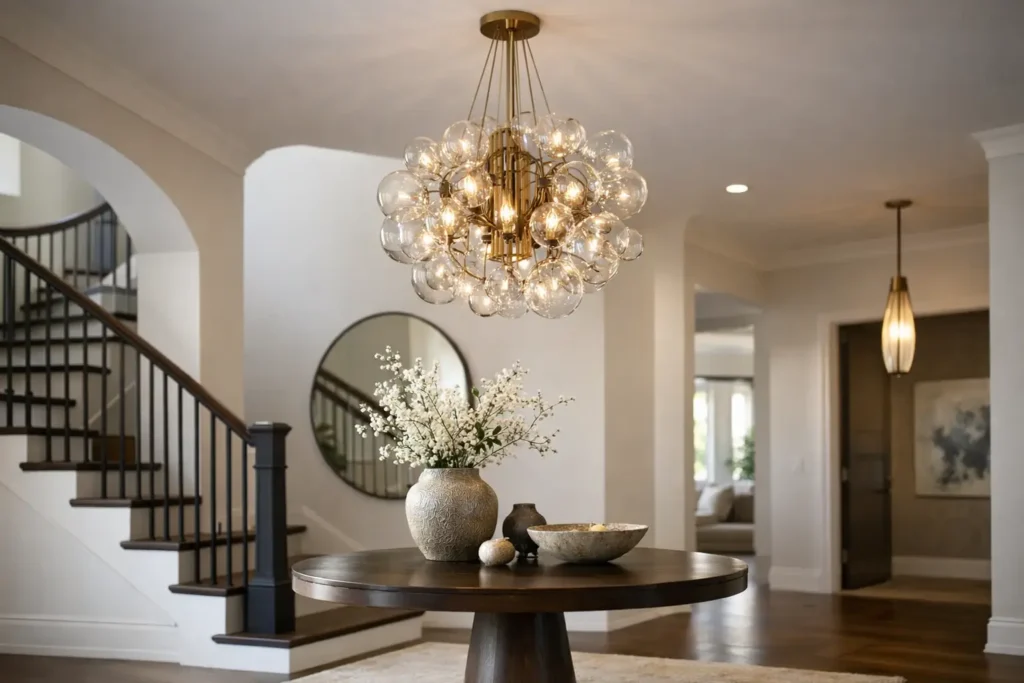
Your foyer sets the emotional tone of your home before a single word is spoken. A striking fixture overhead can make that first impression feel grand, intimate, artistic, or warmly inviting. This guide to statement foyer lighting is for homeowners who want more than basic illumination – they want an entrance that feels collected, expressive, and unforgettable.
A foyer light does two jobs at once. It has to function well enough to welcome guests, help you move comfortably through the space, and support everyday routines. But it also has to carry visual weight. In many homes, the entry is brief in square footage yet huge in impact, which means the light fixture often becomes the defining design moment.
What makes statement foyer lighting work
Statement lighting is not just lighting that is large or ornate. The best pieces feel intentional in scale, shape, and finish. They belong to the architecture while still standing out from it.
In an entryway, that usually means choosing a fixture with real presence. A handcrafted mosaic chandelier, a dramatic pendant, or a clustered ceiling light can all work beautifully, but the success of the piece depends on proportion. If the fixture is too small, it disappears. If it is too large for the ceiling height or floor area, the room can feel crowded rather than elevated.
There is also the matter of personality. Foyers are ideal places for bolder choices because people move through them rather than live in them for hours at a time. Rich glass, layered metalwork, jewel-toned globes, and sculptural silhouettes can feel especially at home here. This is where artisanal lighting shines – literally and visually – because detail is noticed immediately in an uncluttered transition space.
A practical guide to statement foyer lighting size
The quickest way to narrow your options is to start with scale. For a single overhead fixture, the width should feel substantial relative to the footprint of the foyer. In a compact entry, a smaller pendant with vivid color and texture may create more drama than a bulky chandelier. In a two-story entrance, a larger fixture or a cascading multi-globe design often feels more balanced.
Ceiling height matters just as much as width. Standard-height foyers usually look best with fixtures that stay closer to the ceiling or drop modestly. Taller foyers give you more freedom to choose a longer suspension and a more vertical shape. A double-height space can handle a dramatic chandelier that fills the visual air rather than leaving it empty.
The common mistake is choosing only by appearance in a product photo. A beautiful fixture can still feel wrong if it is not scaled to the room. When in doubt, err on the side of visual presence, but not at the expense of comfortable clearance and breathing room.
Hanging height changes everything
A fixture can be the perfect size and still look awkward if it is hung too high or too low. In a standard entry, people should be able to pass beneath it comfortably without the light feeling disconnected from the room. In a tall foyer with a staircase or second-story window, the fixture should visually connect with the architecture instead of floating near the ceiling line.
If your foyer is visible from an upper landing, consider how the fixture looks from above as well as below. This is where handcrafted pieces with intricate glasswork and beautiful metal framing have a distinct advantage. They offer interest from multiple angles, which gives the whole entrance a more layered and luxurious feeling.
Choosing the right style for your entry
The best statement foyer lighting does not have to match every finish in your home. It should, however, feel in conversation with the rest of your interior. If your home leans modern, a cleaner silhouette with vibrant glass can add warmth without fighting the architecture. If your style is traditional, Mediterranean, eclectic, or globally inspired, ornate mosaic chandeliers and richly detailed pendants can feel especially natural.
This is also the perfect space to introduce a piece that tells a story. Handcrafted Turkish lighting brings texture, heritage, and color in a way mass-produced fixtures rarely do. The hand-set glass, warm metal tones, and layered patterns create the kind of entrance guests remember. It feels collected rather than copied.
There is a trade-off here. A highly decorative piece becomes a focal point, which means nearby finishes and furnishings should support it instead of competing with it. If your foyer already has dramatic wallpaper, heavily patterned tile, or a sculptural console, you may want a fixture with a more edited shape. If the space is simple, your lighting can take center stage with confidence.
Color in statement foyer lighting
Color has an outsized effect in entry lighting because the fixture often draws the eye before anything else. Warm amber, deep blue, soft ivory, multicolor mosaic, and jewel-inspired tones all create a different mood.
For a serene, elegant entrance, softer neutrals and warm gold-toned light are often the best fit. For a bolder, more expressive look, saturated blues, reds, and mixed mosaic patterns create immediate drama. Homes with natural wood, plaster, and warm stone finishes often pair beautifully with rich artisanal glass because the contrast feels grounded rather than flashy.
Customization can be especially helpful here. If you love the artistry of mosaic lighting but want a palette that fits your home more precisely, choosing globe colors or chandelier configurations allows the fixture to feel personal. That flexibility matters in a foyer, where one piece often carries the whole design statement.
How brightness should feel in an entryway
A foyer should feel welcoming, not glaring. Statement lighting needs enough output to illuminate the entrance, but atmosphere matters just as much as brightness. The ideal effect is warm, flattering light that makes the home feel inviting the moment the door opens.
This is one reason glass-shaded chandeliers and pendants are so appealing. They diffuse light with softness while still offering decorative impact. Mosaic glass, in particular, adds glow and depth rather than a harsh wash of brightness. The fixture becomes part illumination, part visual experience.
If your foyer is large or opens into other areas, your statement light may need support from sconces, nearby lamps, or natural daylight. That does not make the main fixture less important. It simply means the room is layered properly. The centerpiece should still command attention, while the supporting light keeps the space practical.
Matching the fixture to the shape of the foyer
Not every entry has the same proportions, and statement lighting should respond to that. A narrow foyer often benefits from a vertical pendant or a more elongated shape that emphasizes height without overcrowding the width. A square foyer usually welcomes a centered chandelier with a fuller profile. A round table in the center of the entry can also support a more dramatic overhead piece because the composition feels anchored.
Open-concept homes can be trickier. If the foyer flows directly into a living or dining area, the statement fixture should feel distinct but related to nearby lighting. This does not mean everything must be identical. It means the finishes, tone, or level of ornament should feel connected enough to create harmony.
When a bold fixture is the right risk
Some homeowners worry that a statement foyer light will feel too dramatic over time. Usually, the opposite is true. Because the foyer is a transitional space, it can handle more personality than many other rooms. What feels bold at first often becomes the piece you love most because it transforms an otherwise functional area into something expressive.
The better question is not whether the fixture is dramatic. It is whether it feels authentic to your home. A handcrafted chandelier with rich mosaic detail feels stunning when it reflects your taste and the mood you want to create. It feels less successful when it is chosen only to impress.
Finishing the look around your foyer lighting
A statement fixture has more presence when the rest of the foyer supports it thoughtfully. Mirrors can amplify light and make glasswork sparkle. A console table beneath the fixture can ground the space. Ceramics, decorative trays, or agate accents can echo the artistry of the light without repeating it too literally.
Keep the styling edited. If the chandelier is intricate, a few strong decorative pieces will usually feel more elegant than many small ones. Let the fixture breathe. The goal is not to crowd the foyer with detail, but to create a memorable composition where craftsmanship leads.
At Whispers of Istanbul, this is where handcrafted lighting truly earns its place. A foyer fixture should not feel like an afterthought pulled from a standard lighting aisle. It should feel chosen – rich in color, rooted in artistry, and capable of turning a brief entry into a lasting impression.
When you choose statement foyer lighting with care, you are not only brightening the entrance. You are giving your home a signature moment right at the door, and that kind of welcome never goes unnoticed.