

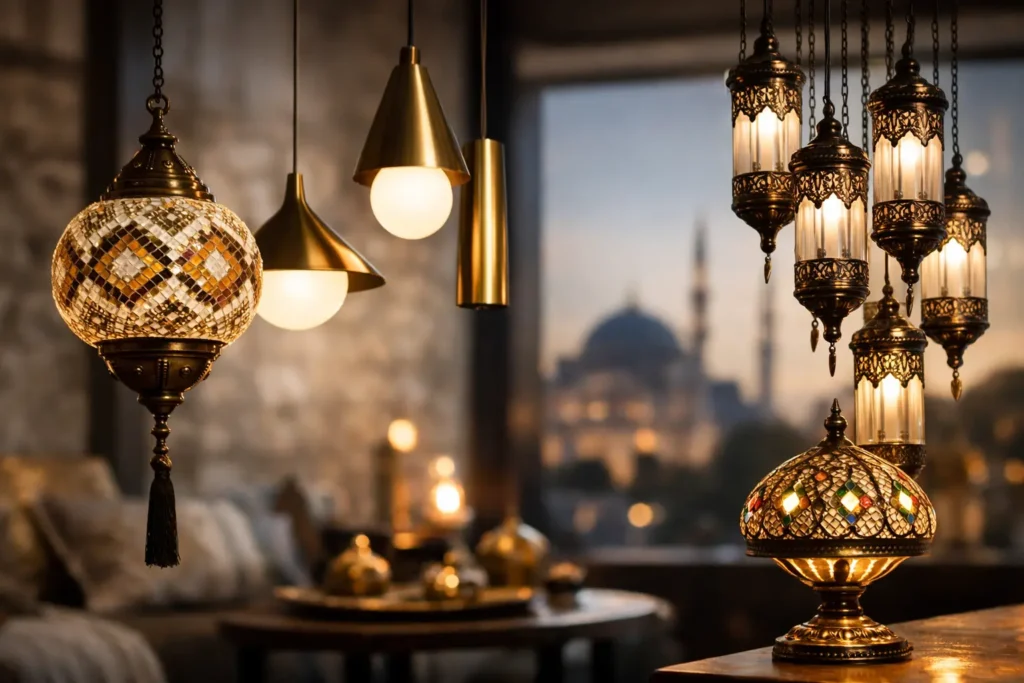
A plain ceiling fixture can light a room. A handcrafted Turkish fixture can change its mood entirely. That is why Turkish lighting trends 2026 are drawing so much attention from homeowners, designers, and boutique hospitality spaces that want more than function. They want glow, color, artistry, and a piece that feels collected rather than copied.
This year’s direction is clear: statement lighting is getting warmer, more personal, and more decorative. Clean modern interiors are not disappearing, but they are softening. Rooms that once leaned spare and neutral are now asking for a focal point with depth and soul. Turkish mosaic chandeliers, pendant lights, sconces, and table lamps fit that shift beautifully because they deliver pattern, craftsmanship, and atmosphere in a way mass-market lighting rarely can.
What Turkish lighting trends 2026 really look like
The biggest shift is not one single shape or finish. It is the growing preference for lighting that feels expressive. In practical terms, that means more layered glass, richer jewel tones, mixed globe arrangements, and silhouettes with visible handwork. Shoppers are moving away from fixtures that disappear into the ceiling and toward pieces that hold their own as decor.
That does not mean every room suddenly needs maximalism. In fact, one of the strongest looks for 2026 is contrast. A modern room with quiet furniture can handle a vibrant mosaic chandelier. A neutral bedroom can come alive with a pair of patterned sconces. A simple entryway can feel memorable with one pendant that introduces color and texture without overwhelming the space.
The appeal is emotional as much as visual. Turkish lighting carries an old-world artistry that feels warm and inviting, but it also photographs beautifully in contemporary homes. That mix matters. People want interiors that feel personal in real life, not just polished on a screen.
Color takes center stage in Turkish lighting trends 2026
For years, many interiors stayed safely inside a palette of white, beige, black, and brushed brass. Those tones still have a place, especially in kitchens and architectural spaces, but decorative lighting is heading somewhere richer. Turkish lighting trends 2026 favor color stories that feel layered rather than loud.
Deep sapphire, amber, emerald, ruby, and soft turquoise are especially strong because they create warmth when illuminated. These shades do not sit flat the way painted finishes often do. Mosaic glass changes with daylight, evening light, and bulb temperature, so the same piece can feel lively in the afternoon and intimate at night.
There is also growing interest in customized color combinations. This makes sense for buyers who want a fixture to connect with a rug, tile detail, accent pillow, or artwork already in the room. Custom globe colors are becoming less of a niche request and more of an expected design option. If you are furnishing a dining room, stairwell, or covered patio, that flexibility can make the difference between a beautiful lamp and one that feels truly meant for the space.
The trade-off is that stronger color asks for a little more intention. If the room already has bold wallpaper, dramatic drapery, and patterned upholstery, a quieter lighting palette may work better. If the room is restrained, color in the lighting can do the heavy lifting.
Sculptural chandeliers are replacing flat overhead lighting
In 2026, ceiling lighting is becoming more architectural. Instead of relying on a flush mount that simply fills a practical need, more homeowners are choosing chandeliers and multi-globe pendants that create shape above the eye line. This is especially true in dining rooms, foyers, staircases, and open-concept living areas where vertical space deserves attention.
Turkish chandeliers are well positioned for this moment because they naturally combine sculpture and illumination. Clustered globes, tiered silhouettes, and cascading forms give a room movement. They feel collected and handcrafted, not factory-perfect, and that slight variation is part of the charm.
Scale matters here. A large chandelier can be spectacular in a room with height, but oversized fixtures in low ceilings can feel crowded. On the other hand, a fixture that is too small may disappear. One of the smartest directions for 2026 is choosing a configuration that fits the room rather than defaulting to the biggest option available. Customized chandelier arrangements are especially appealing because they allow people to match the drama of the fixture to the proportions of the space.
Layered lighting matters more than ever
One ceiling fixture rarely creates a finished room. Another major shift in Turkish lighting trends 2026 is the move toward layered light sources that build atmosphere throughout the day. That means combining overhead lighting with wall sconces, table lamps, and floor lamps to create softness and dimension.
This approach works beautifully with Turkish designs because each category brings a different kind of presence. A mosaic chandelier can establish the room’s main identity. Table lamps can repeat color at eye level and make sideboards, consoles, or nightstands feel styled. Wall sconces can frame a mirror, hallway, or bed while adding a boutique-hotel touch. Floor lamps help fill dark corners and make seating areas more inviting.
The result is less harsh, more flattering light and a space that feels considered rather than simply furnished. It is also practical. Layered lighting gives you choices, which matters in rooms that need to shift from bright and active to calm and ambient.
Artisan texture is winning over polished uniformity
Another defining theme for 2026 is the return of visible craftsmanship. People are paying closer attention to the details that make a piece feel human: hand-set glass, subtle variation in pattern, aged metal finishes, and decorative forms with character. Turkish lighting naturally speaks this language.
This is part of a wider move away from interiors that feel overly standardized. Perfectly matched furniture sets and anonymous fixtures can leave a home feeling flat. Handcrafted lighting introduces texture and nuance, even when the room itself is fairly streamlined.
That said, balance still matters. If every object in a room is highly ornate, the effect can feel busy. A handcrafted lamp often shines brightest when paired with cleaner upholstery, simpler case goods, or a controlled color palette. The magic is in the mix.
Smaller spaces are embracing statement pieces
One misconception is that mosaic lighting only belongs in large homes with dramatic ceilings. In reality, one of the most interesting developments in 2026 is how often statement lighting is being used in condos, apartments, powder rooms, breakfast nooks, and compact entryways.
Smaller rooms are ideal places to be bolder. A petite pendant over a breakfast table, a pair of sconces in a hallway, or a vibrant table lamp on a console can transform a modest footprint into a memorable design moment. Because the space is contained, the lighting feels intentional rather than oversized.
This is also where decorative lighting delivers real value. In a room with limited square footage, every piece needs to work harder. A handcrafted lamp can provide light, color, texture, and personality all at once.
Why customization is shaping the market
Mass retail trained shoppers to accept what is available. The 2026 customer wants more say. They want to choose globe colors, fixture size, and sometimes even the overall arrangement. That is one reason artisan-driven lighting continues to gain ground.
Customization is not only about style. It is also about confidence. Buyers want to know a chandelier can suit a tall stairwell, a low dining room ceiling, or a hospitality setting that needs a signature look. They want the freedom to make the piece feel personal.
For a family-owned retailer like Whispers of Istanbul, that flexibility is more than a selling point. It is part of what makes handcrafted decor so special. A customized Turkish fixture does not feel like a generic purchase. It feels like a design choice with intention behind it.
Where Turkish lighting works best in 2026 interiors
Dining rooms remain a natural fit, but they are far from the only place to use these pieces. Foyers are embracing chandeliers that set the tone from the first step inside. Bedrooms are becoming softer and more romantic with bedside mosaic lamps or elegant wall sconces. Covered patios and sunrooms are welcoming pendant lights that add warmth after sunset.
Boutique businesses are leaning in too. Restaurants, salons, lounges, and small hotels increasingly want lighting that guests remember. Turkish mosaic pieces deliver that visual signature instantly, especially in spaces trying to feel elevated without becoming cold or corporate.
The best placement depends on the role you want the fixture to play. If you want drama, put it where people enter or gather. If you want intimacy, place it where the glow can be enjoyed at closer range.
The most compelling homes in 2026 will not look like showrooms. They will feel layered, expressive, and confidently personal. Turkish lighting belongs in that future because it offers something many spaces are missing – artistry you can actually live with. If your room is asking for warmth, color, and a true statement in style, this may be the year to let the light do more than brighten the corners.